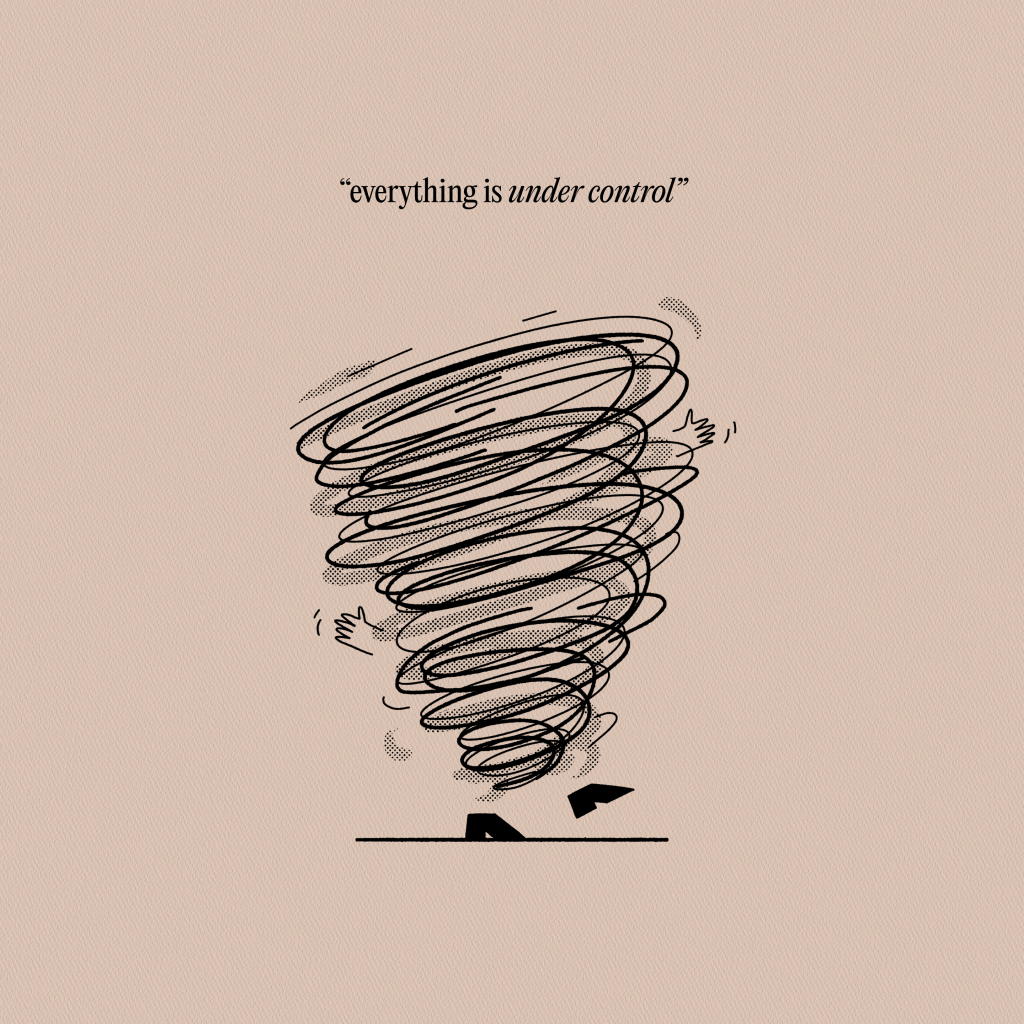
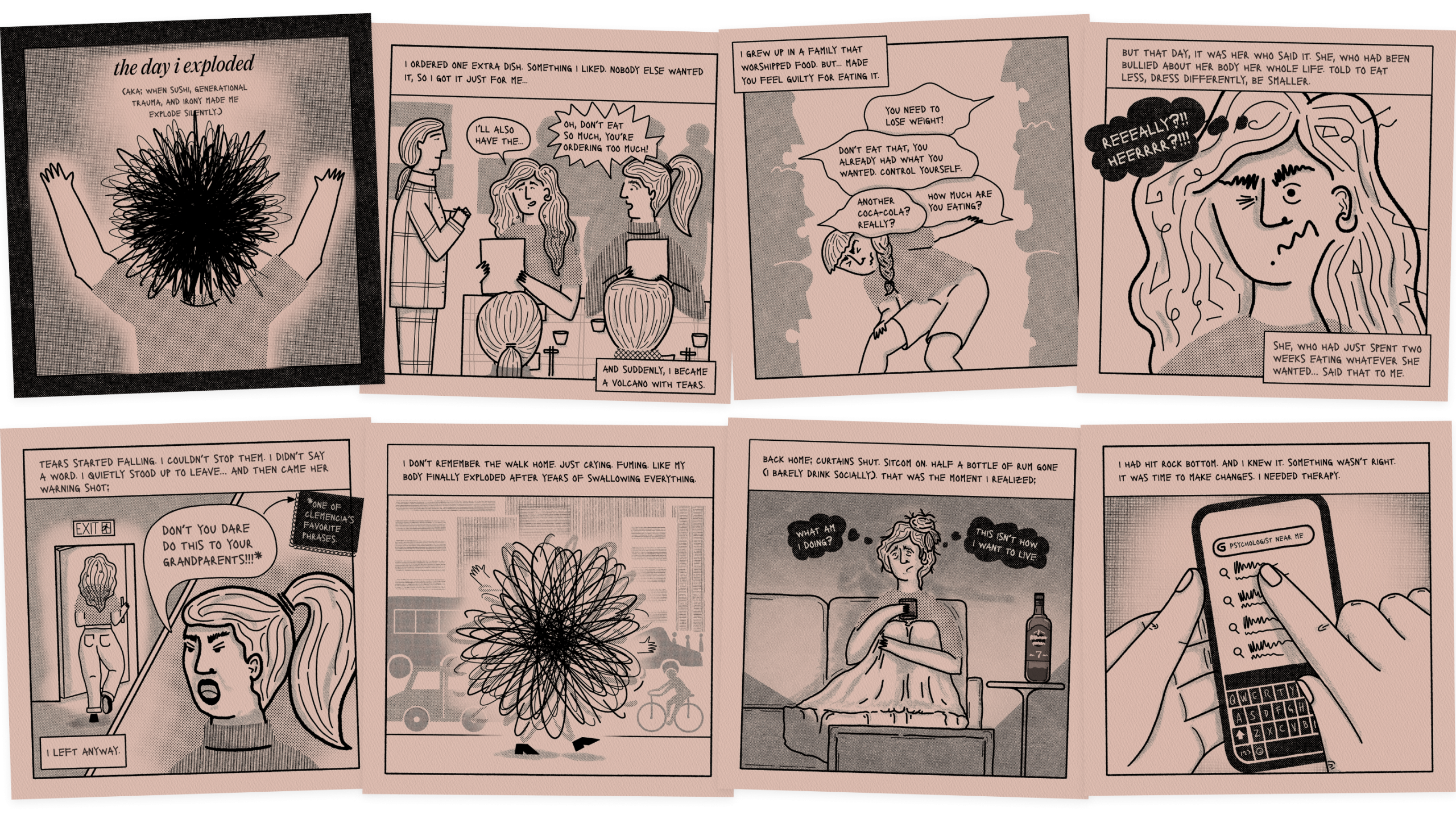
Life in Lililand is my own project: visual storytelling about my mental health, told through comics and illustrated carousels on Instagram, with a cast of characters I built along the way. No client, no brief, just years of therapy I needed to see outside my own head.
A challenge nobody assigned me
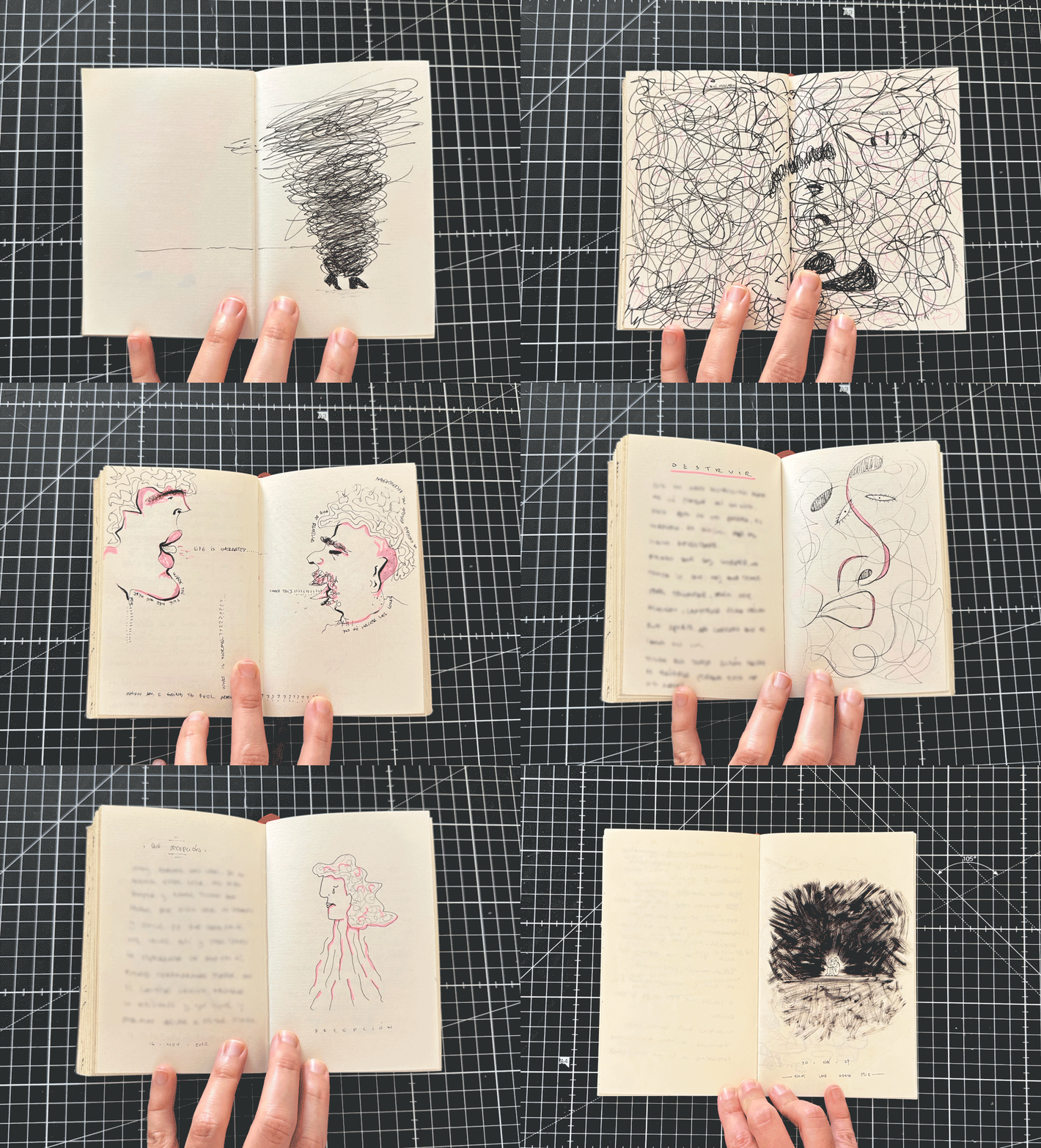
Drawings I made thought my mental health journey
The real challenge here was mine: I wanted to see my own growth. I’d been carrying all these lessons from therapy for a while, and I needed to make them tangible, visual (something I could actually look at instead of just feeling). Making it public came after, almost as a side effect: if putting this into images helped me see the past clearly, as something that had happened to someone else, maybe it could do something similar for whoever else needed it.
Being my own client
Normally my job is pulling a brief out of someone else: what the client wants, what they can’t quite put into words yet. This time I was the client, and I had no idea how to brief myself.
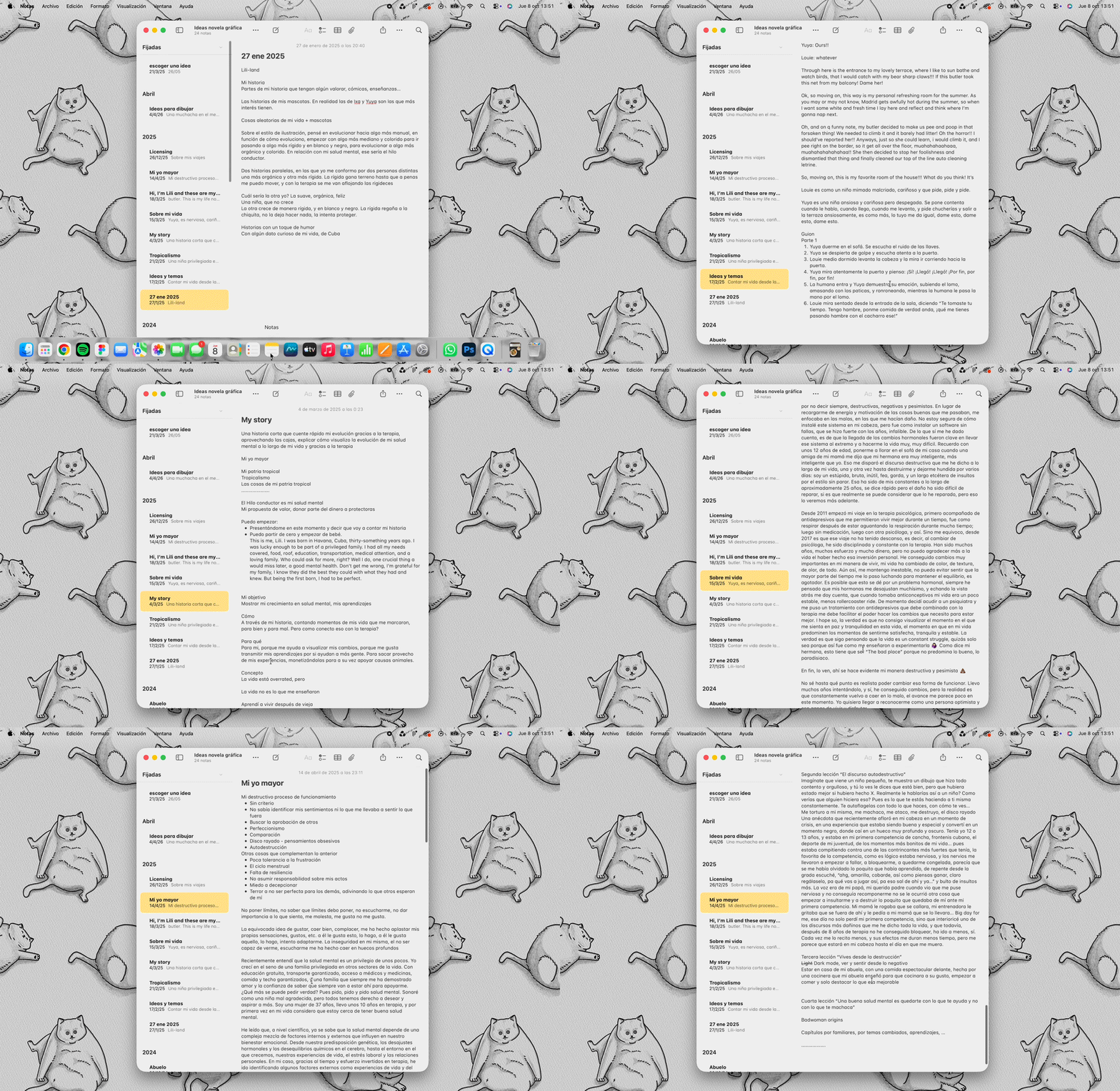
I started with a brain dump. Everything I’d learned in therapy about my own mechanisms: perfectionism, comparison, guilt. I wrote stories trying to put those lessons into words, and feeding all of it to AI is where my actual reflection process began. I knew I wanted to tell my mental health journey visually. That’s all I knew.
From there, I combined the lessons with stories to show where each one came from. At some point the idea of turning each harmful mechanism into a character showed up. I’m still not sure why I had old-fashioned Spanish names in my head, but I started testing names that fit each mechanism. Seeing them inside my own stories is where the whole thing clicked: I could show my actual life experiences with these characters intervening, shaping how I reacted.
Brain dump
Finding a style of my own
As a designer, I’m used to adapting, reproducing a style, fitting a brand, pulling out what someone else wants. «Having your own style» always sounded a little strange to me, because I couldn’t point to anything coming from me that felt like it was only mine. But building a real one turned out to be about something harder than a visual decision: giving myself space to just be, to like who I am, instead of treating myself as a constant failure. If you don’t like yourself, you can’t really have a style of your own. Because you’ve already decided everything that comes from you isn’t worth much.
Defining it took the same back-and-forth as everything else in this project: I’d land on something, change it, change it again, closing myself off to specific visual choices and then not being able to commit to any of them. Having AI to think it through with is what eventually turned that mess into something I could actually use.
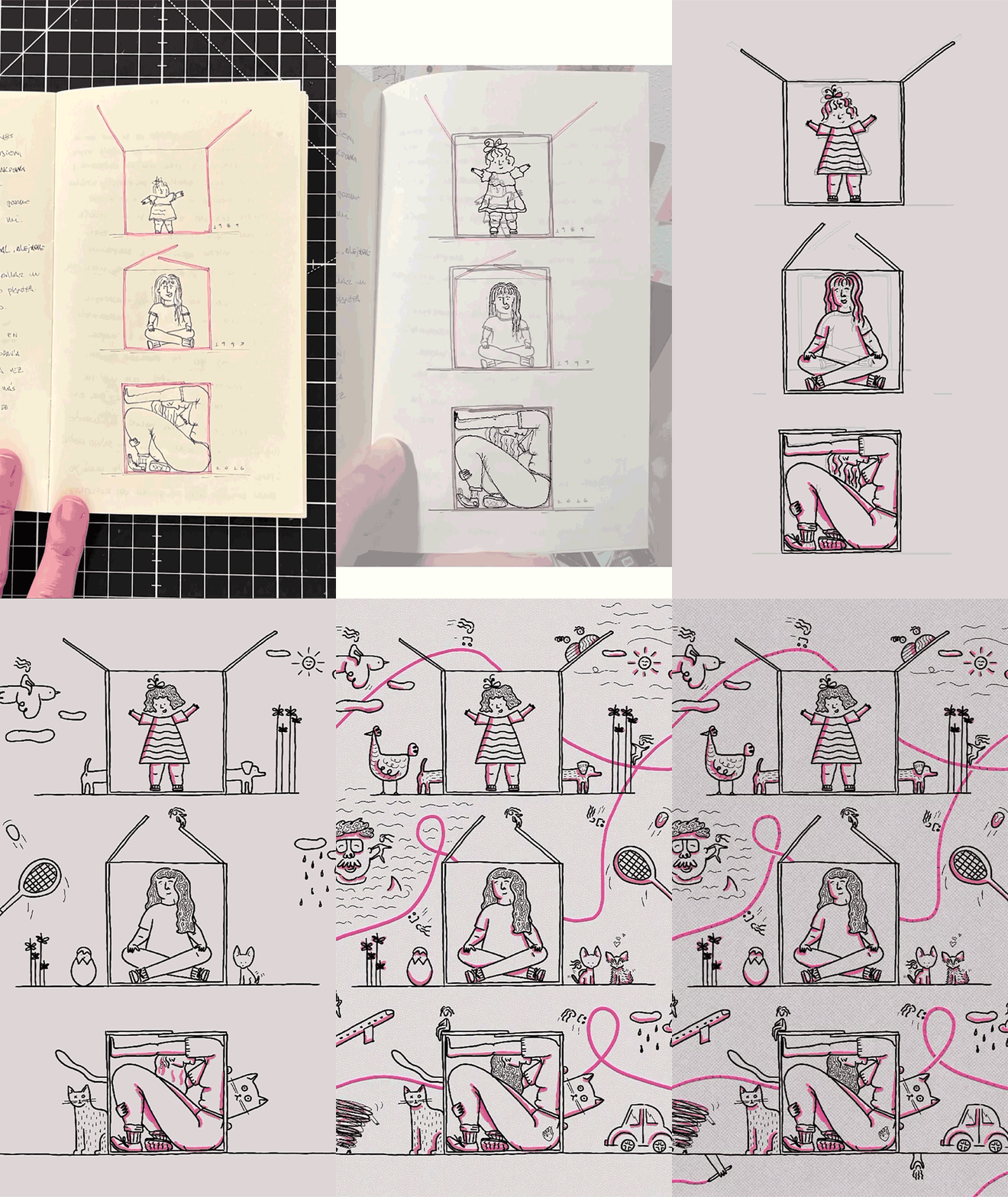
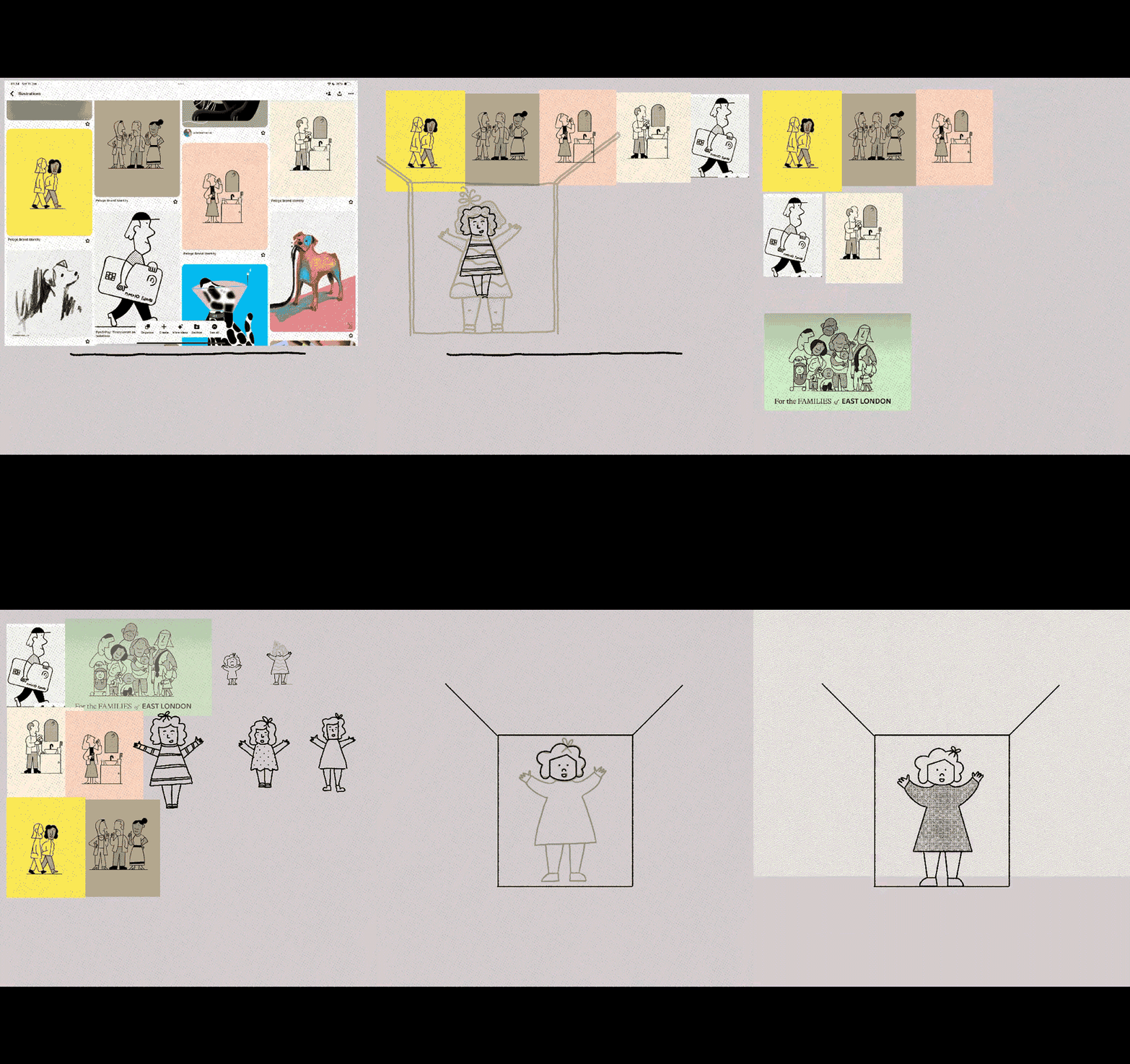
Three boxes sketch
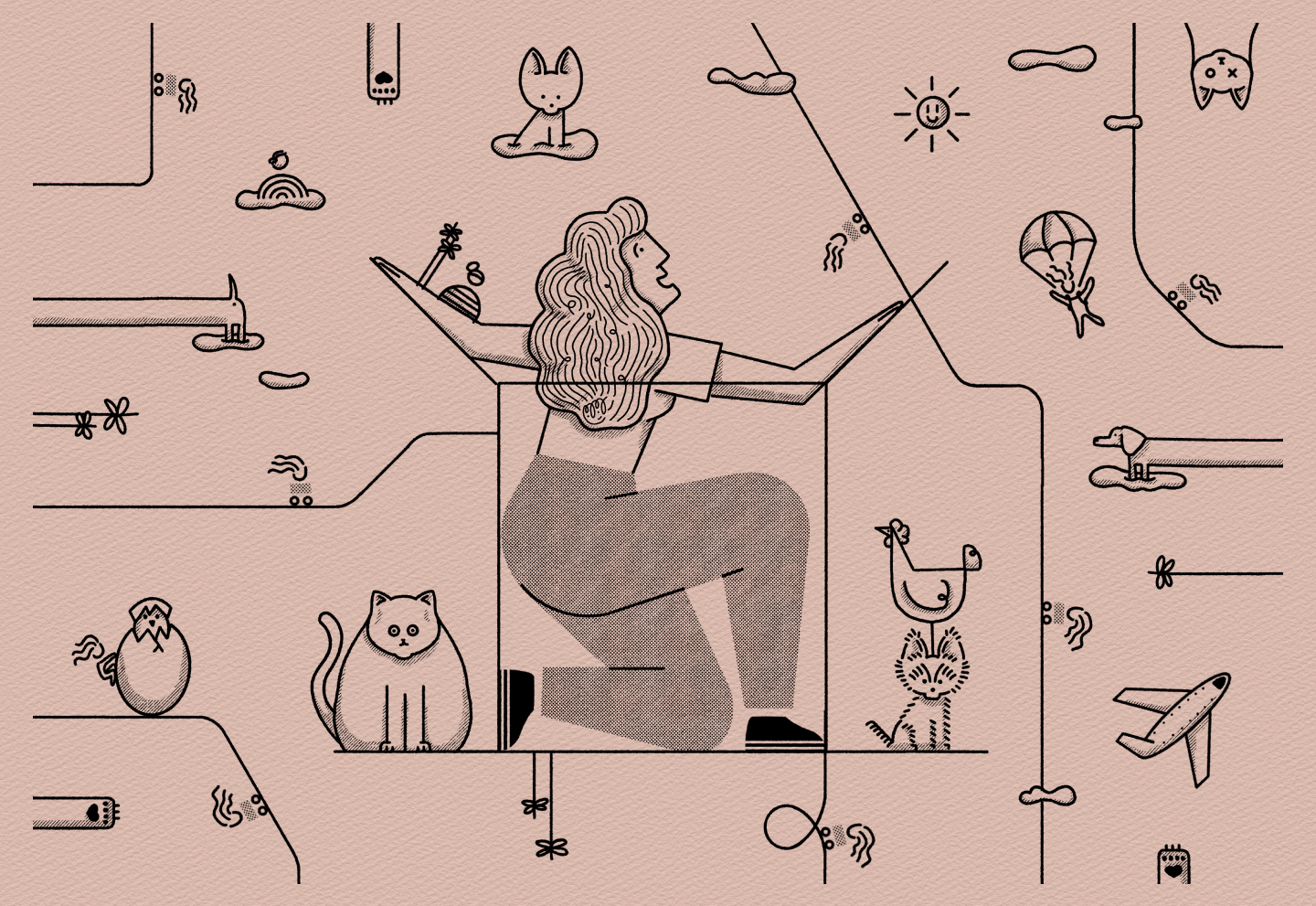
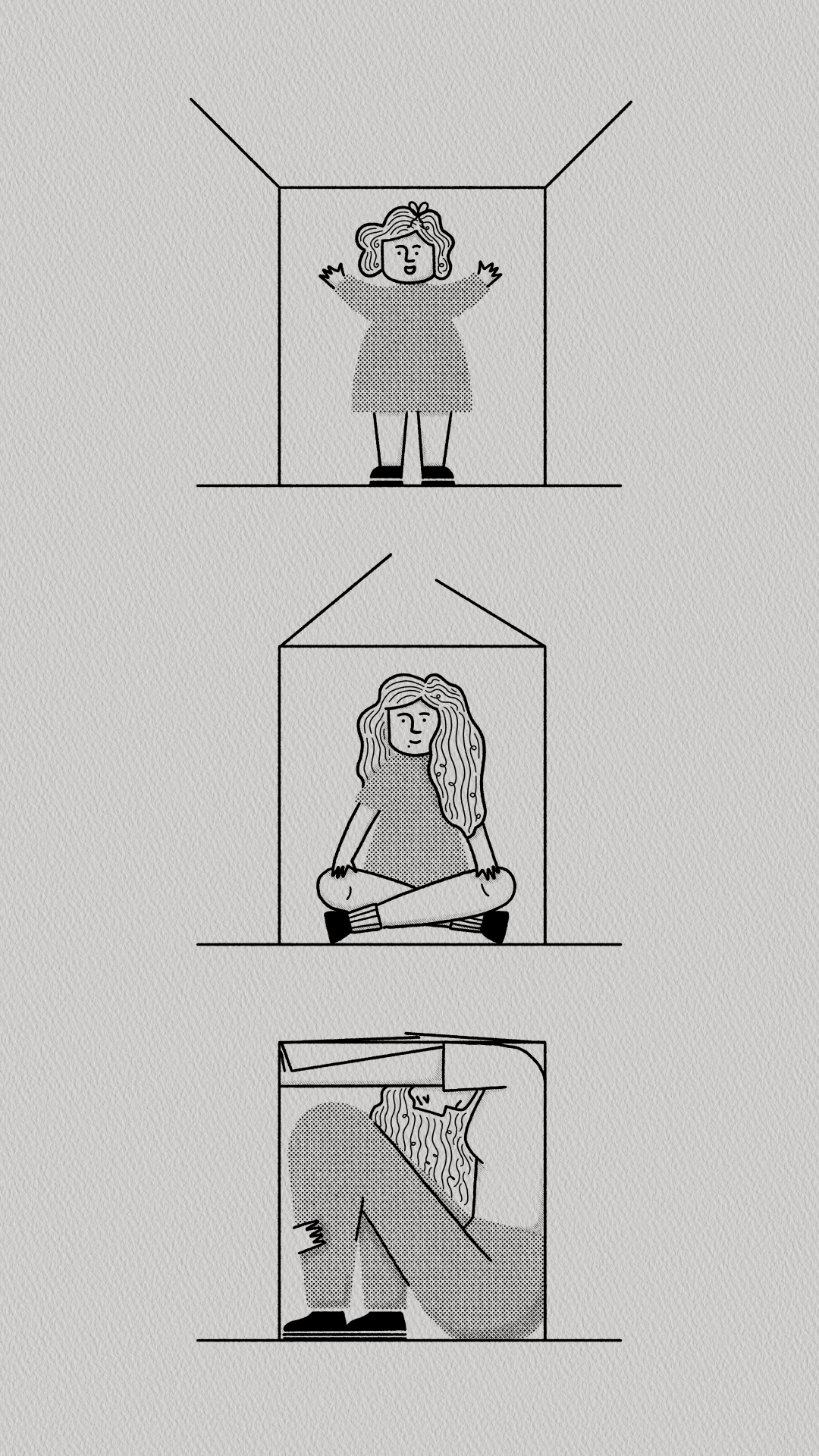
I’ve always kept a personal notebook: sketches, notes, a bit of everything. For a while I used it like a diary: a reflection on one page, a simple drawing of the day’s main emotion on the other. One of those drawings became one of the most representative images in Lililand: after growing a fair amount, I saw myself as someone who’d been put in a box as a child, to learn certain limits, except I never got out. There was room to grow inside it as a kid. As an adult, there wasn’t, and I’d become someone who’d stopped living, sticking strictly to rules that contradicted each other and never moved.
Refining my style
I started by collecting illustration references I liked, then sketching my characters, and landed on a monochrome line style with fill textures. The first thing I drew was my chubby cat. I don’t remember why, but it set the direction for everything after. From there I started drawing myself.
Three boxes illustration in the final style
The style started rigid, almost geometric, until I learned that wasn’t sustainable: too clean, too straight, and it didn’t match a head that’s sometimes chaotic and sometimes rigid at once. It’s evolved since, not drastically, just looser. I’m happy with where it landed.
What I built
Once the concept and the style existed, three things gave it shape: the cast, the tone, and how each story actually comes together.
The cast
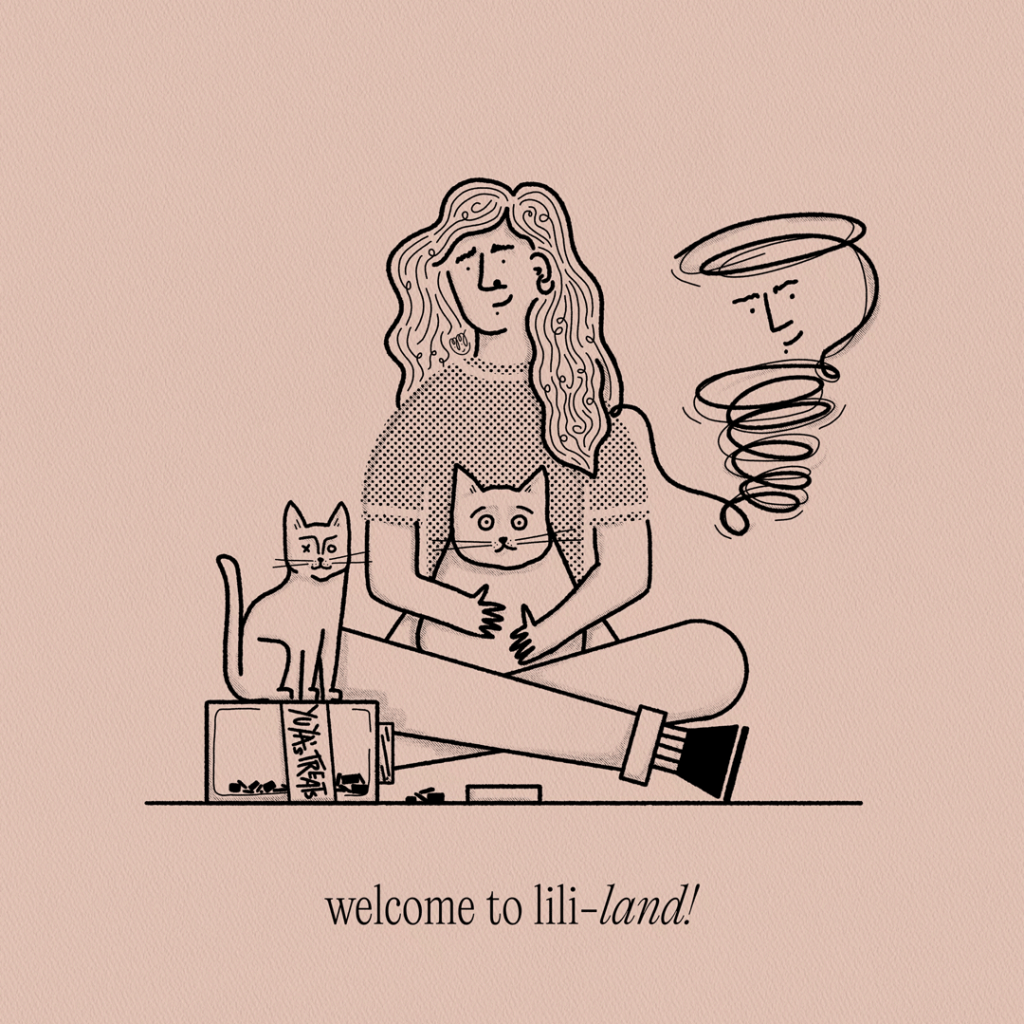
I’m the protagonist and narrator, alongside my two cats: Yuya, a one-eyed black cat who brings chaos and tenderness, and Louie, a rescue who grounds the strip in everyday, lighter moments.
Yuya, Louie and I
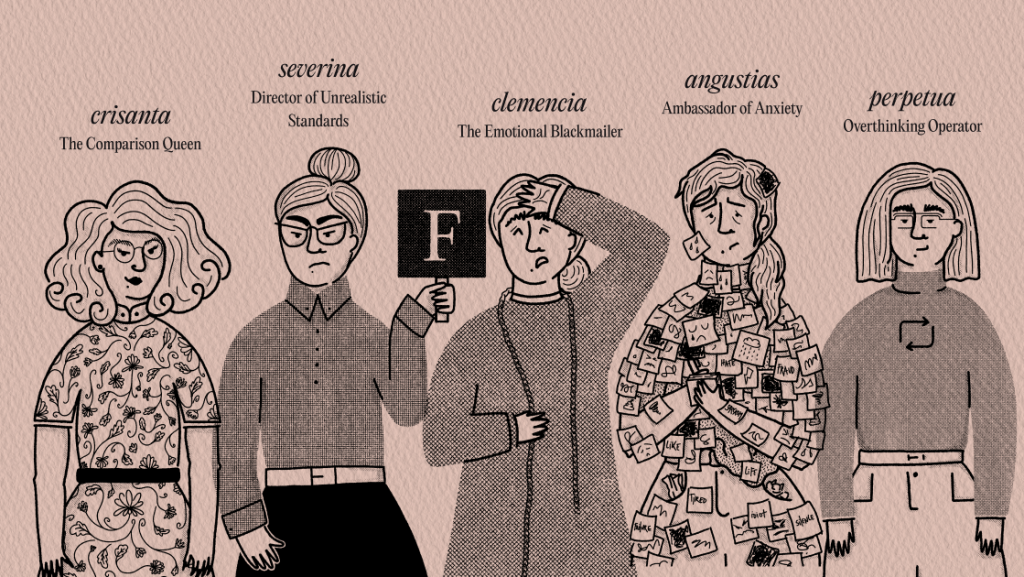
Around us is the thing I’m proudest of: the Saboteur Squad, a cast of characters I built to personify the internal voices I carried for years without ever naming them. Identifying them, giving them a shape I could finally work with, is something I’m genuinely proud of. Don’t get me wrong, I would’ve preferred never needing them in the first place.
Severina, Director of Unrealistic Standards: perfectionism, born the day 13-year-old me discovered, for the first time, I was a disappointment for not being the best player I could be.
Crisanta, Director of Unnecessary Comparisons: insecurity, working from a warped mirror that shrinks every one of my achievements and magnifies everyone else’s.
Clemencia, Head of Guilt That Isn’t Mine: over-responsibility, carrying a chain made of other people’s problems.
Angustias, International Ambassador of Imaginary Catastrophes: anxiety, standing in front of an alarm that never fully turns off.
Perpetua, Executive Director of Self-Destruct Mode™: rumination, replaying my old mistakes on a loop, and the one who calls the other four into the room when things really unravel.
They’re not villains: they’re survival strategies that outlived their usefulness.
The Saboteur Squad
What it sounds like
I never wanted this to read as tragic. Treating mental health like something tragic makes people look away, so I write from reality instead, with transparency, and a fair amount of irony. I’ve learned that laughing at yourself, at what happens to you, is one of the ways you can tell a wound is actually healing.
That’s where the tone comes from: honest, vulnerable, reflective, sharp when it needs to be, emotional without sentimentality, hopeful without naivety. No toxic positivity, no empty affirmations, no clinical jargon.
How the stories come together
There was never a plan. I didn’t have a clear idea of how to make this tangible. It came together one story at a time. The first one I illustrated was Severina’s: the story of my first competition, the voice I had the clearest handle on, because I’d already lived the moment that showed me where my fear of not being perfect, of not meeting expectations I believed someone close to me held for me, actually came from.
Each story starts the same way: a real moment, combined with which of the voices showed up, what role they played, how they made themselves felt, and what damage they did. I don’t spell out who’s who in real life. It can usually be worked out from context, but that’s never the point. The point is showing how I reacted, and how that turned into internal patterns I eventually learned to recognize and, to some extent, change.
The story that carries the most weight in the whole archive is the day I realized I could leave. It reads like a story about boundaries, but it’s really the story of the night I hit bottom: the night that started my relationship with therapy, and with it, years of growing, changing, and slowly becoming someone I actually recognize. Family expectations, years of anxiety, guilt and perfectionism all collide in that one moment, and for the first time, leaving stops being a failure and starts being an option.
Turning these mechanisms into characters didn’t just let me talk back to them. It helped me understand what’s actually happening when they activate. That took a long, difficult process of reflection, trying to give shape to years of therapy.
Seeing my own growth has been the most gratifying part of this, closely followed by the style itself. I built it out of thin air, with no brief to react to or push against, and I’m genuinely happy with where it landed.
People I know have messaged me privately saying they loved what I was making: the stories, the way I told them, the style.
I used AI throughout, not to write this for me, but to give shape to scattered reflections I couldn’t structure on my own. A tool, not a shortcut.
What I didn’t expect was realizing, somewhere along the way, that I no longer resented the people closest to me for the ways they’d hurt me without meaning to. That’s part of why I don’t spell out who’s who in these stories: the point was never to cast anyone as the villain, only to show how I reacted, and how that turned into patterns I’ve learned to recognize and, slowly, change.
Life in Lililand is on hold right now, but it’s not something I’ll ever really close. It’s going to stay alive with me until I’m the one who’s finished.